
The Orthographic Learning Journey
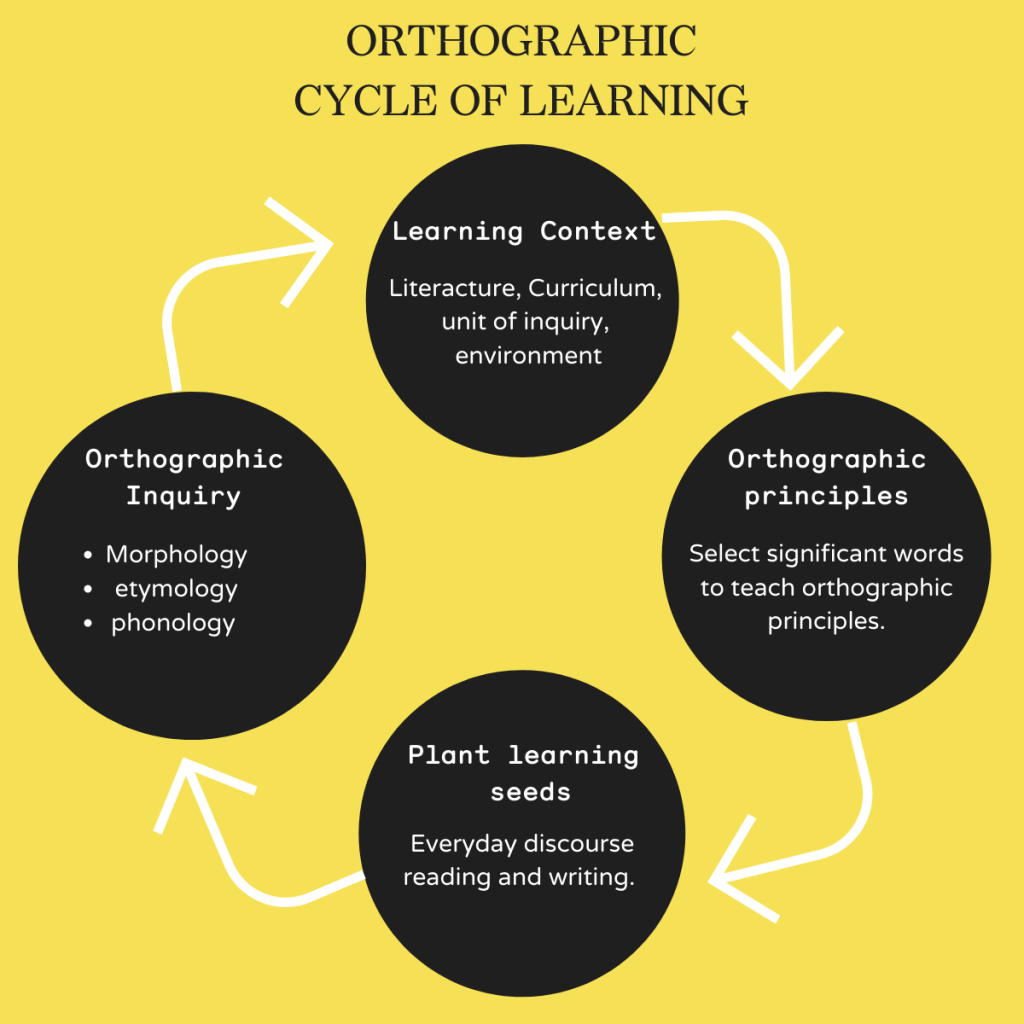
Research has shown that Orthographic Inquiry is an effective method of language instruction for ALL students. It is an opportunity for children to learn about all areas of the English orthography (spelling system) in a structured yet fun approach.
Orthographic Inquiry looks at phonology, morphology and etymology of the English language. Let me break down what they are.
Phonology – this is the sounds that make up words, a phoneme is a spoken sound and a grapheme is the written sound – structure phonics is the well known method to learn to read.
Morphology – this is the structure of the language, grammar and spelling rules. This is one of the most forgotten aspects of English orthographic instruction,
Etymology – this is the historical relevance of the word. Has it greek or latin origin? What other words contain this same base word? This is such a fascinating part of the inquiry.
How Does This Work In My Classroom?
It starts with a question?
What are cycles and what are cycles not?
Typically this links to a unit on cycles you are teaching, it could be seasons, life cycle of a butterfly, water cycle…
Record all student ideas on a working wall.
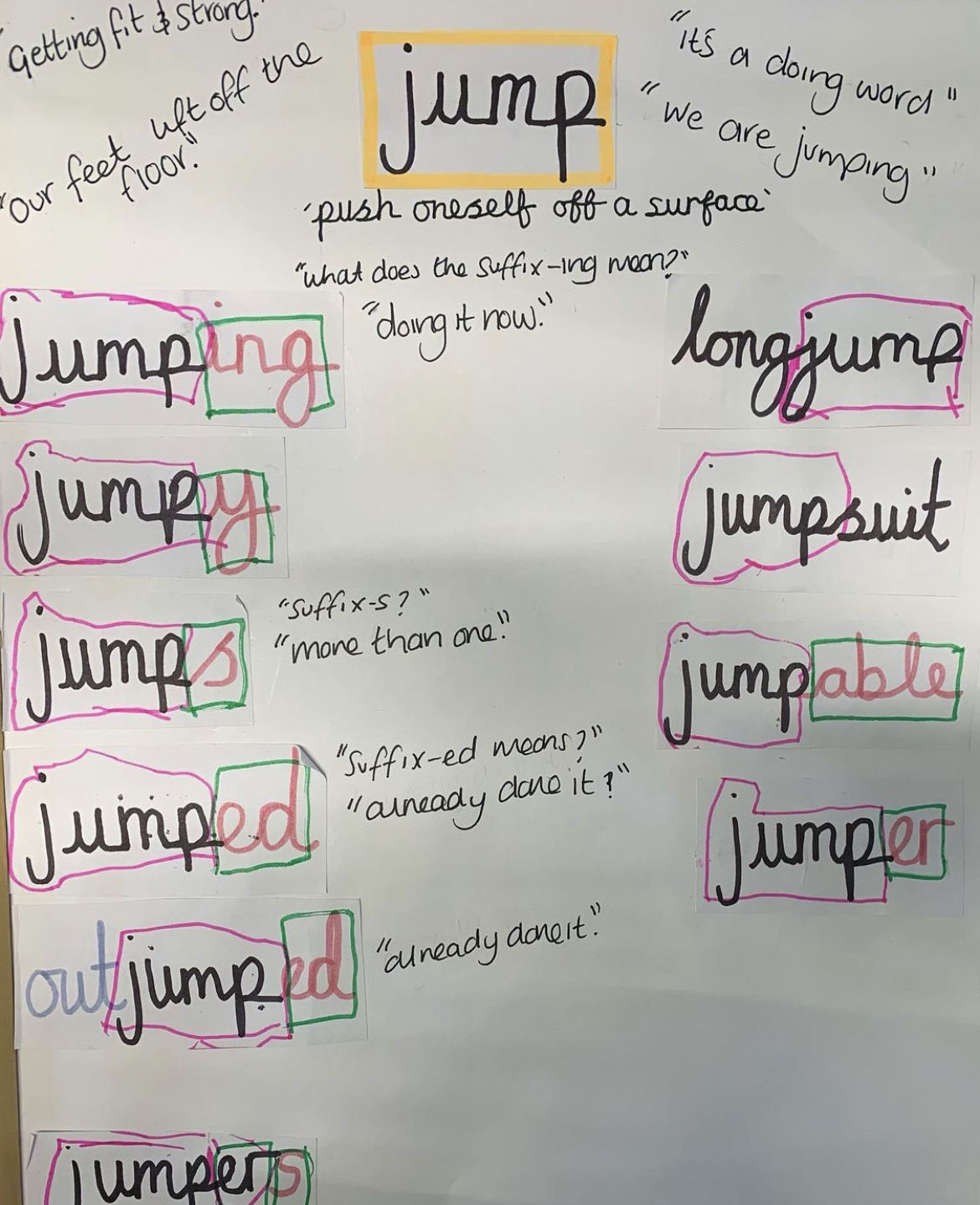
Throughout the week introduce students to a new word, bi c-y-c-l-e-, re c-y-c-l-e, c-y-c-l-ing. You can see that we say the suffix or prefix together and then spell out the word cycle. This helps students to identify the structure of the word. When discussing the words always use correct terminology;
- suffix
- prefix
- base
- root word
As the week progresses encourage pupils to write their questions and place them on the working wall so everyday you can pick one and answer or investigate the answer as a class.
How are bicycle, cycle and recycle alike?
What does tricycle mean to you?
How can we use cycle in a sentence?
Once you have several words get the children to create a word web, if they think the word is related it can go on the web, if unrelated it is placed off the web. This is a great discussion activity as they negotiate its place on the web!
Etymology
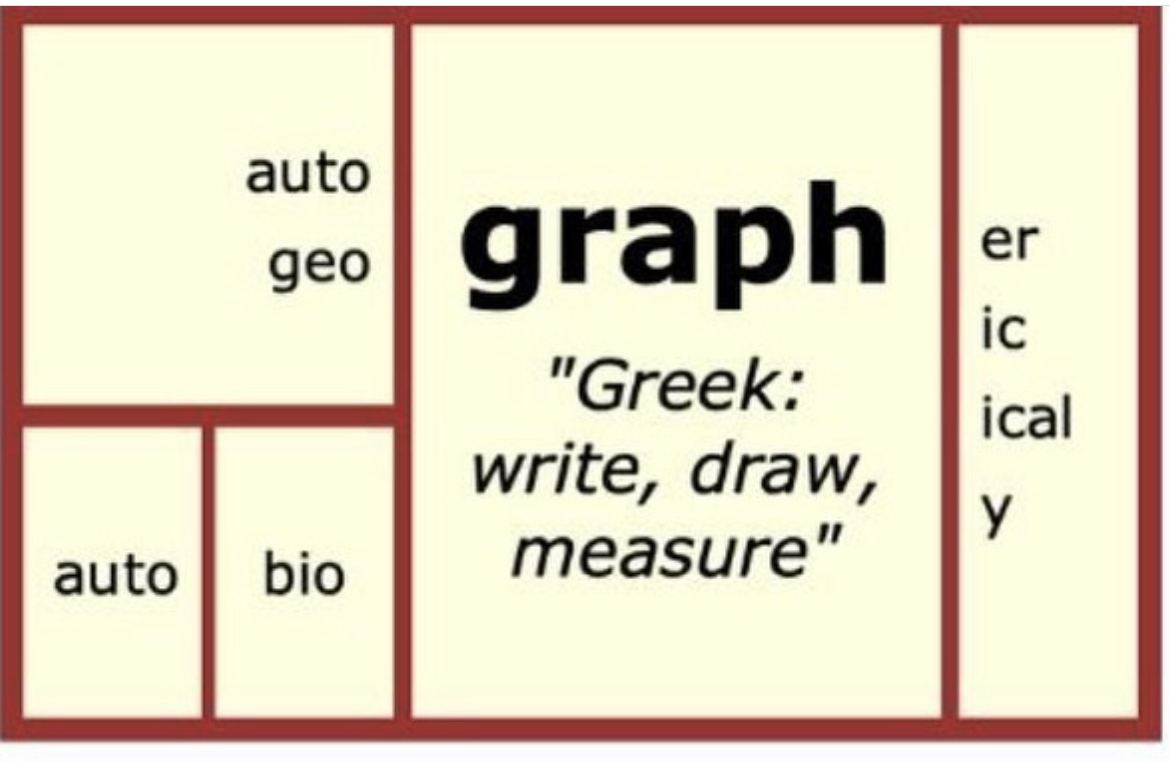
You can share the etymology of the word by using images of cycles through time. For example cyclops = round eyed or cyclone = wind that circulates around a centre.
Look at the Greek Origin KYKIOS. How has this word changed?
Single I always there, They y is still there, non syllabic <e> at the end now.
Look at other words gymnastics, mystery, hydrate. These all have greek origins!
Is <y> always alone?
we can write it as a digraph too <ay> <ey> <oy> each making different sounds! This can be a learning seed for future investigations.
Morphology
Make signs for students to wear .
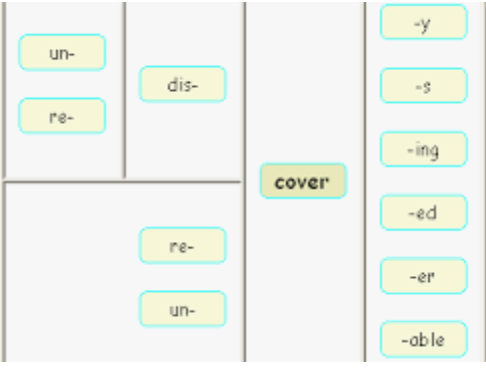
Base element, prefix, suffix, connecting vowel letters.
Have the children understand that the base element is key to understanding the ,meaning of the word.
Hold up words from the word web and students have to find the base, prefix, suffix….. for each word. Cycle + s = cycles. re+cycle+s = recycle.
Create a word sum matrix in the classroom using post-it-notes. Once complete have children take it home to share with their families and are what they have learnt.
Phonology
C can represent 4 phonemes. Place in a bag the following words: Cycle, city, pencil, circus, cylinder, cake, cook, picnic, can, come, crack, character.
All of these have c in different positions, they have a different lexical + function in words, some have c as part of a grapheme, some have other graphemes that make the sound <c> such as /ck/ /ch/.
Create a Venn diagram and have the children working in groups to place the words.
What have you placed it there?
How interesting that you have placed cycle and circus in the crossover?
Come back as a whole class, before each word is discussed and placed pronounce it, discuss its meaning & announce its structure pausing at morpheme boundaries.
Continue to look at why the c makes different sounds. Is a vowel present?
Can they find all the graphemes that make this sound /k/?
Assessment
We can assess each children ability to understand and apply all 3 areas of orthography.
For Morphology we are looking to see if the child can use the correct terminology, prefix, suffix, base element when discussing the morphological family of words in a structured classroom situation. Does the child announce the elements orally when writing a word sum? Can the recognise added suffix’s when reading e.g <-ing> <-s> <-ed>? Can they link other words to the base element?
For Etymology we are wanting them to share ideas about where a word may come from, share group decisions with confidence. Can they use given resources to find the origins of a word. Does the student understand that English words have come from other languages?
Finally, Phonology do they understand that a phoneme can be represented by more than one grapheme or a grapheme represent more than one phoneme? Have they begun to use this knowledge in their writing? Can they read taught graphemes confidently?
I do hope this guide to Orthographic Inquiry was helpful and exciting! What an amazing way to teach children Orthography is a creating and interesting way!
Pop any questions you may have on the contact page and I will get back to you as quickly as possible! Enjoy the journey with your children and enjoy growing with them!
Katie x

 Adapted Learning