

Orthographic mapping is the process by which we connect the written letters of the alphabet to the sounds they make so that they can ultimately form words.
By connecting sounds to their letters, students will eventually be able to encounter unfamiliar written words and draw on their sound-letter knowledge to sound them out.
By connecting the different sounds, students will form and comprehend words and then successfully learn to read that written text.
Read with Your Ears
The term orthographic or orthography is derived from Greek and refers to the convention of representing a language’s sounds in written symbols. Essentially, it’s how we spell by using letters.
With the end goal of teaching your students how to read in mind, orthographic mapping brings together phonemic awareness (sound awareness) and phonic awareness (alphabet awareness). This will help students recognize letter patterns as they associate with spoken language and store that information in their long-term memory.
Letter patterns are the sequences or orders of letters used to spell words. Orthographic processing is how we interpret those patterns as spelling and memorize them.
The reason sound plays such an important role is because we learn how to speak before we learn how to read. Sound patterns are already committed to memory, and orthographic mapping connects those sounds to letters so that spoken language matches written language, and written language can then be interpreted/read. Through practice, we blend letter-sounds with letter-sounds and form words. Once we can read multiple words, we know how to read a sentence and can go on to paragraphs, books, and more!
Why Orthographic Mapping?
When teaching students how to read and write, it’s easy to get caught up in the visual aspect of language (or, in other words, the letter symbols). Orthographic mapping reinforces that connection between previously understood oral language and its written counterpart. One way to think about this is that when you teach a new word, you and your students sound it out first. The pronunciation is based on cues from the letters in that word.
With orthographic mapping, you’re essentially adding the layer of having students identify the letter making the sound and bringing an awareness to the letter-sound connection that they can store and use when they encounter those same letters in new words. When they face the new word, they’ll identify the letters, recall the sounds associated with those letters, string the sounds together, and identify the word that they’re reading (basically sounding out in their head what they’re seeing on the page).
And I’ll say it again: they’re reading!
Orthographic Mapping with Elkonin Boxes
A common method of orthographic mapping is sound/elkonin boxes. Students will start with a word and then separate that word into its sounds with boxes. So, the word look will appear as:
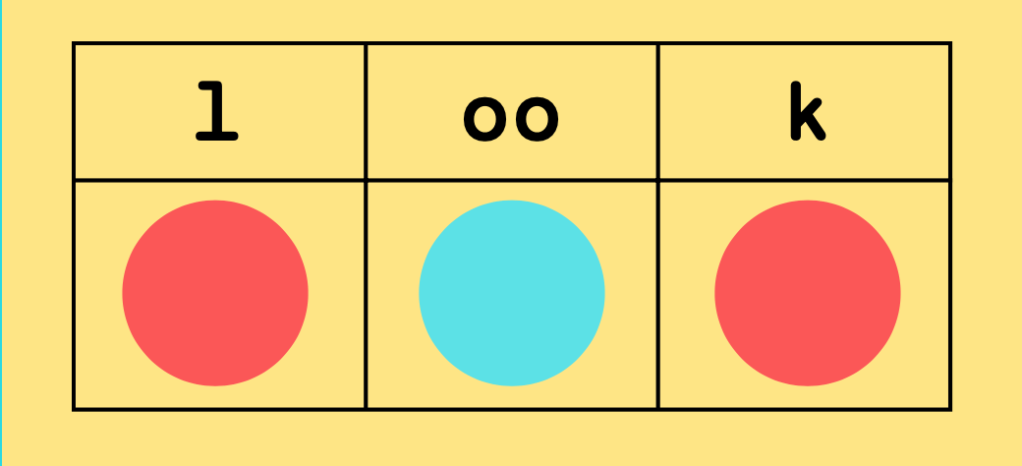
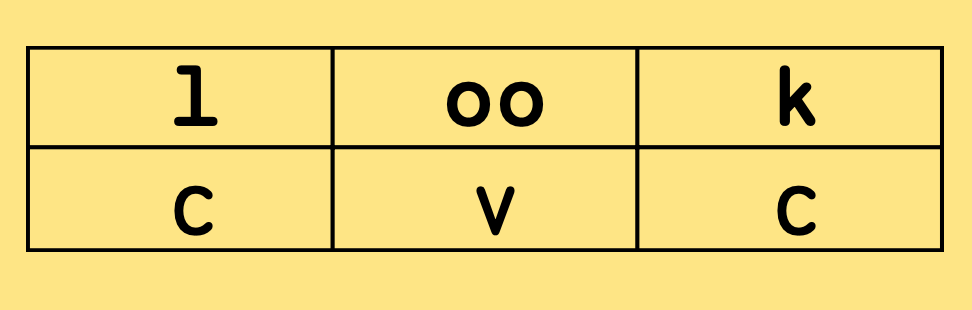
Students can start with orally mapping the sounds and placing a button in each box as they say the word.
Students can then move onto identify the /l/ sound with the letter< L>. Then they’ll connect the /oo/ sound with the repeated letter <O>. Finally, they’ll acknowledge the short /k/ sound with the letter <K> and use the sound buttons to help sound out each phoneme in turn and blend together to make the word.
Through making those sound-letter connections, and practicing repetition to encourage memorization, students can then go on and apply those identified patterns to other words.
For example, that double /oo/ and short /k/ sound are in the words cook and book.
Recalling the sounds associated with the familiar letter pattern, your students can identify the written letters in either of those new words, add the new sounds associated with the different first letter, and then pronounce and read the full word.
Circling back, that idea of recall is what’s important here.
The end goal is for students to get familiar with these sound and letter patterns so that when they see a word they’ll be able to identify it on sight.
As they learn to read, they’ll start combining word recognition with semantic awareness and improve their fluency and automation when reading as well as advancing their overall reading skills.
I hope this was helpful,
Pop any questions below and subscribe for more information!
Kx

 Adapted Learning
Leave a comment