

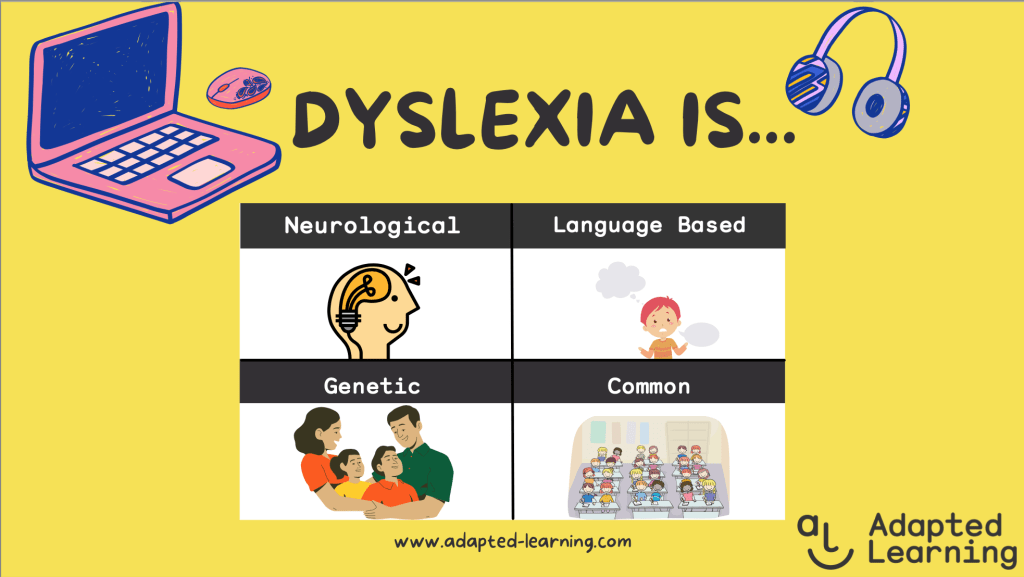
1. Dyslexia is a language based difficulty
Dyslexia does not effect vision and it has zero impact on intelligence! Dyslexia is a language based difficulty which impacts the way our brain processes written language. A dyslexic child struggles to read because they have difficulty identifying speech sounds and learning how they relate to letters and words.
Dyslexia can impact on reading comprehension, spelling, writing and maths. It can also impact everyday skills and activities such as, social interaction, memory, and dealing with stress.
2.Dyslexia is very common
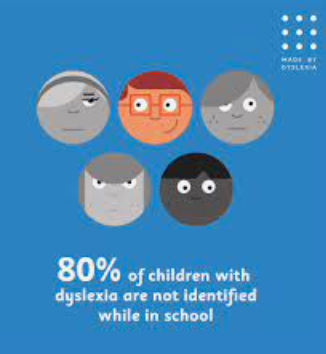
1 in 5 people world wide have dyslexia! That means on average you will have 4-5 children displaying symptoms of literacy difficulties in your classroom. That is a huge proportion! Dyslexia is one of the most common causes of reading difficulties in elementary school children. This is due to lack of identification by teachers and missing out on the vital IEP and special education that will allow them to get the help in reading that they need.
3. Dyslexia is lifelong and can run in families
Did you know that dyslexia is genetic! When diagnosing dyslexia and specific literacy difficulties I always get a family history. Through this I look for any genetic links in the family history that can back up my diagnosis.
Dyslexia cannot be cured BUT it can be supported, and accommodation and modifications used so that the child can thrive in the classroom and beyond. We just need the right tools and strategies in place to help. This is why early intervention is key.
4. Dyslexia can be diagnosed early
There is a myth going round that you cannot diagnose dyslexia till the age of 7. This is incorrect! Children can show signs of dyslexia very early in their language development and should be treated as such from Kindergarten (if the signs are there). We can officially use standardised tests from the age of 4 to diagnose dyslexia.
The diagnosis is not the be all and end all. If a child is displaying signs of dyslexia then we should be placing accommodations and modifications and interventions in place immediately rather than waiting for the diagnosis. Early action is always the best!
5. There is not just one way to treat Dyslexia
Every child is unique and everyone with dyslexia has varying challenges. From orthographic processing to orthographic decoding, letter pattern challenges or phoneme decoding. Whilst yes they all have the common thread that relates to reading and language skills, every child is different.
We therefore as teachers you can not and should not use a blanket intervention in the hope that all dyslexic children will make progress and benefit from it.
6. Which intervention is best?
Whilst Orton Gillingham is incredibly popular in the USA there is an international move towards ‘Structured Literacy’ as the best method of intervention for students with any literacy based difficulties.

A Structured Literacy approach emphasises the structure of language through:
- Phonology – speech sounds
- Sound-Symbol Association – the relationship between sounds and symbols
- Syllables – a word or part of a word that contains one vowel phoneme
- Morphology – the study of the forms of words
- Syntax – sentence structure
- Semantics – meaning of words
It is the way we teach these areas through Structured Literacy that make it unique. It is important that we follow these principals when planning our teaching:
- Systematic & Cumulative – lessons are organized and build upon previously learned concepts
- Explicit – instruction is direct and intentional
- Diagnostic – assessment is ongoing (formal and informal)
For information of how to use it in your classroom check out this blog post.
7. Use both accommodations and modifications to support
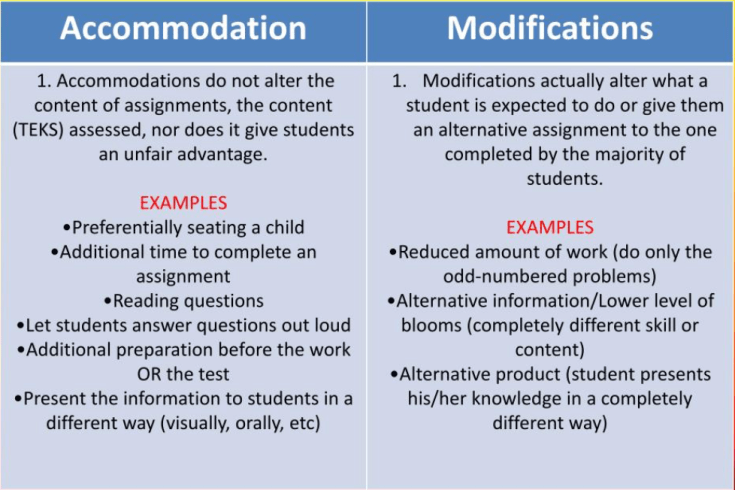
When a student has an Individualised Education Program (IEP) or a 504 plan or EHCP, you’ll likely hear the word accommodation. You may also hear school staff members say modification. While the two words sound similar, they mean different things.
An accommodation changes how a student learns the material. A modification changes what a student is taught or expected to learn. Here is a chart that explains the differences.
8. Strategies that support dyslexic students are great for ALL students
Often teachers worry about all the additional planning and preparation children with literacy challenges will add to the classroom. The fact is, if ALL children are taught using structured literacy, then ALL children will thrive! Simplify your life and teach all children as you would a dyslexic child and its a win win, great structures and sequential teaching for all and less planning and prep for you!
9. Dyslexia can be co-occurring with other learning challenges
Children who have a literacy difficulty may have challenges in other areas of their learning. This could be with attention, motor skills, sensory, speech and language… We call these co-occurring difficulties because a child presents with more than one. Be on the look out for other difficulties a child my have but don’t mistake the two. Dyslexia is language and reading based, if they have vision, concentration or behavioural difficulties these must have further investigation.

10. Praise, Praise, Praise
Dyslexic kids have to work so hard at school just to keep up with their peers. Often their work is messy, incomplete or missing. Praise for effort. Praise for following instructions. Praise for trying their best. They should not and will not thrive in an environment that praises outcomes only. Your job is to keep them wanting to come to school and try their best everyday even if it’s really challenging. That praise is so significant and important so don’t forget it!
Katie x


 Adapted Learning
Leave a comment