
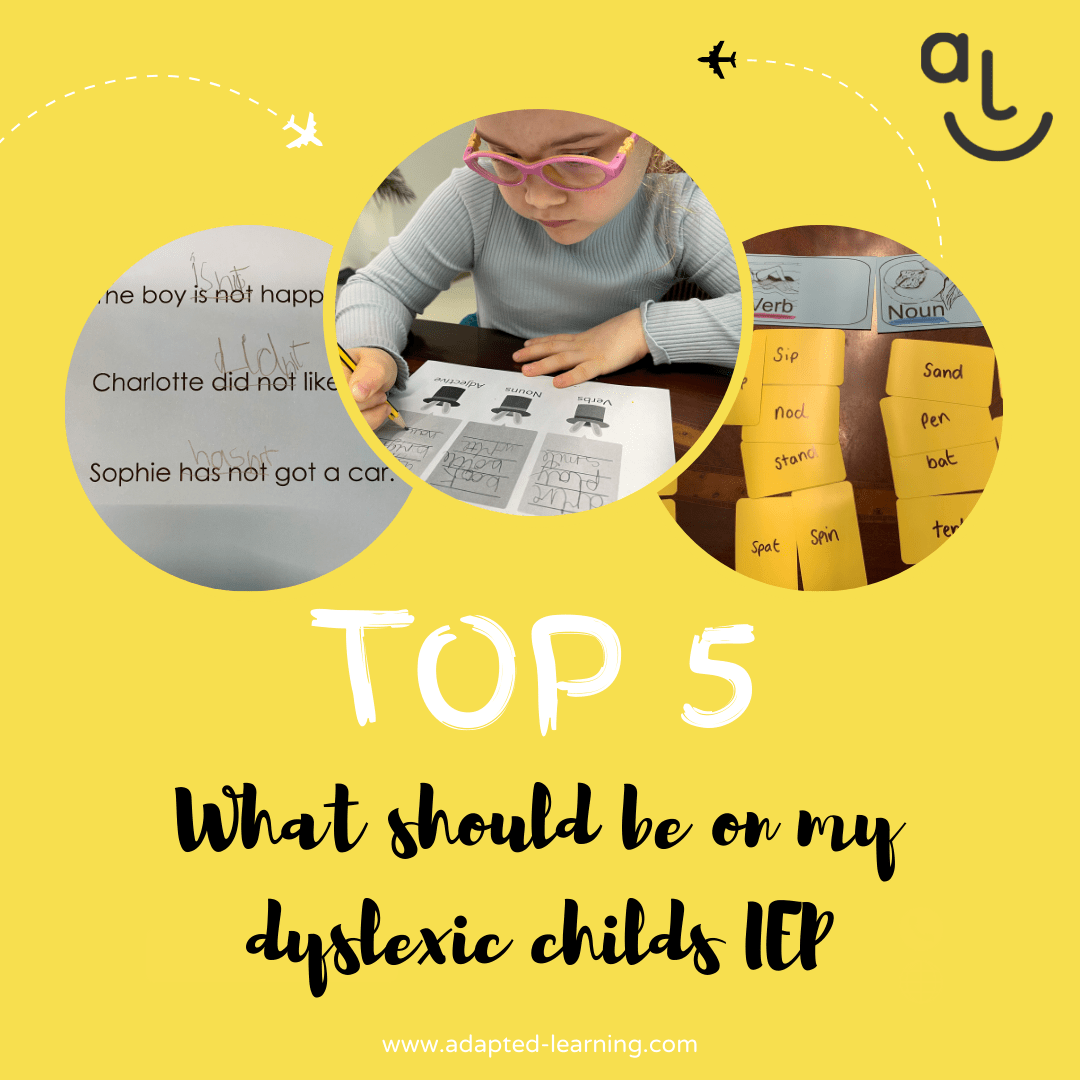
So you have been called in for your child’s IEP meeting, you want the best for your child but you are unsure what type of accommodations to fight for.
I am here to support you! Having written hundreds of IEP’s and being a Dyslexic Specialist Teacher and Assessor I will give you some of the key things that your child will need on their IEP to get the support needed at school.
Let’s begin.
1.
The number one thing your child should have on their IEP is 25% extra time in all tests and examinations.
The reason for this? dyslexic children loose time because it takes them much longer to read and process what is being asked of them. To make examinations and tests fair they are awarded extra time to compensate and make it fair for all.
NO this is not an advantage over other children, this make it a level field!
2.
Classwork amount should be differentiated.
Now let me clarify this, dyslexic students IQ is not affected by their challenges BUT if everyone else is given 5 sentences I would expect a dyslexia students to have 3. This is so that they can focus on quality in their writing, editing their work and taking time to read accurately. It also is great at building confidence! It allows them to finish when their peers finish a task and not always be behind.
Obviously this applies to hand written work which I will talk more about next.
3.
Recording work in different ways.
The aim of independent student work it either to show their understanding, practice a skill or discover new learning.
Too often I see class teachers insisting that a dyslexic student records their learning in the same way as everyone else, even tho this is clearly challenging for them.
It is really important that the IEP states that a child can record in a different way such as:
- Verbally, (recording their opinion on an iPad or explaining it to a teacher).
- Type work in the class or use text to speech apps.
- Closed Text (filling in the gaps rather than writing the whole sentence).
- Drawing a picture/diagram and labelling it.
- Collage.
- Bullet point summary rather than full sentence writing.
- Story boards for a story plot.
- Mind Maps
4.
Intervention
All dyslexic children should be receiving some form of support. This support should be using a structured literacy approach so that they can work slowly and systematically to improve their reading and spelling.
This support could also be in class where a teacher works through the tasks with the student in a similar structured approach.
This could also be an in class reader who is there to read for and support
Either way some type of intervention should be on your child’s IEP. If not you need to insist on it!
5.
Instructional aids
Dyslexic children need to have access to manipulative, visual prompts, sentence starters and editing prompts, for example. These are essential to allow students to succeed and must be part of any IEP. It is the teachers duty to ensure they are provided and used in lessons as part of the strategies taught.
I know navigating a new diagnosis as well as having to have formal IEP meetings can be stressful and overwhelming. I hope this post helps to empower you to fight for your child’s needs, know what to ask for and ensure they will be happy and successful at school.
Email me or subscribe to my blog to find out more info on Dyslexia!
K x

 Adapted Learning
Leave a comment