
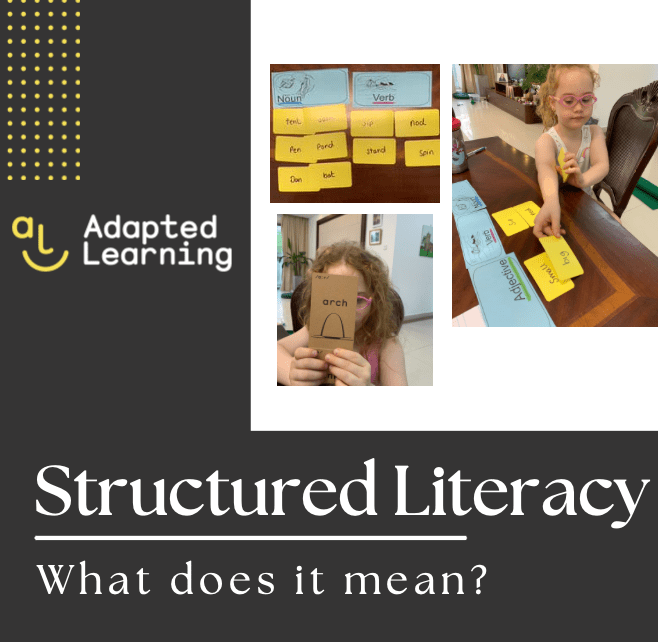
I know many people have heard of Structured Literacy, many may feel against it, but when you begin to understand what it is and why it is so important you will love it as much as I do!
1 in 5 children are Dyslexic or have a Specific Literacy Difficulty. That means when we teach with a balanced literacy approach or a heavy phonics approach to teaching reading, 1 in 5 students won’t make the progress needed in literacy without additional intervention and support!
1 in 5!
Where as, when we teach with a structured literacy approach, it benefits all of our students!

A Structured Literacy approach emphasises the structure of language through:
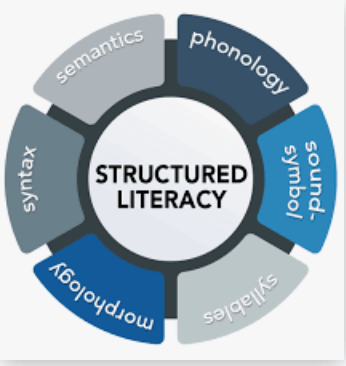
- Phonology – speech sounds
- Sound-Symbol Association – the relationship between sounds and symbols
- Syllables – a word or part of a word that contains one vowel phoneme
- Morphology – the study of the forms of words
- Syntax – sentence structure
- Semantics – meaning of words
It is the way we teach these areas through Structured Literacy that make it unique. It is important that we follow these principals when planning our teaching:
- Systematic & Cumulative – lessons are organized and build upon previously learned concepts
- Explicit – instruction is direct and intentional
- Diagnostic – assessment is ongoing (formal and informal)
It is important to note the learned concepts, not taught . Children in this approach should have learned the skill and apply it before we move on to the next concept. The assessment element is key to ensuring you are not moving on too quickly and having student with only basic understanding being left behind.
Up to 50 percent of children require direct, or explicit, instruction to learn to read proficiently, while up to 15 percent of children need explicit instruction to learn to read. Each sound and symbol is taught in isolation (as a discrete unit) until children can manipulate the sounds and symbols to create words and sentences independently.
Some children learn to read regardless of the type of reading instruction received. Approximately 40 percent of children learn to read relatively easy with broad, or implicit, instruction. These students can recognize patterns and words as a whole. However, all children still benefit from direct instruction to reach their maximum reading potential.
Latest research in Dyslexia show that a synthetic Phonics approach as the sole method of instruction prevent students making progress in reading. A true Structure Literacy Approach should teach Morphology alongside the Phonology as early as 4 years old. Check out my Orthographic inquiry page to find out more on how to make this fun and captivating and child led!
So you want to know where to start with Structured Literacy Approach?
Stay tuned, coming up next on the Blog is lesson examples, planning templates and curriculum overviews….
Subscribe to the Blog to get all my new information right to your inbox and some freebies too.
Katie x

 Adapted Learning
Leave a comment