
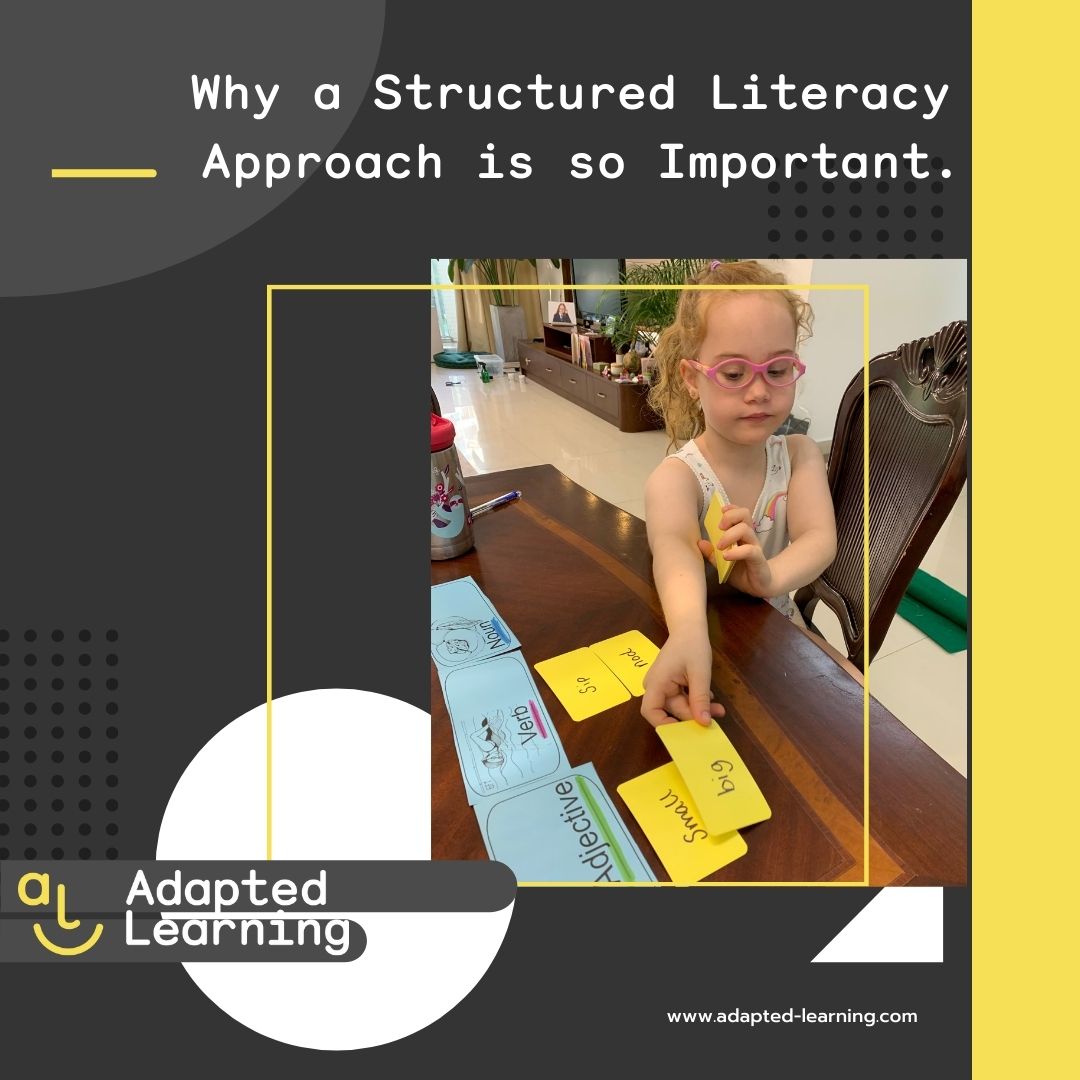
Children with Dyslexia and children without both benefit from a structured, sequential approach to literacy. Why? Because 30% – 50% of children find learning to read difficult and need explicit teaching and reinforcing of both reading, spelling skills and grammar skills.
Phonology, sound symbol association, syllable instruction, morphology, syntax, semantics are all components of a structured approach and are worked through systematically to ensure full mastery by the child/children.
This type of approach is Systematic and Cumulative. Systematic means that the organization of material follows the logical order of the language. The sequence must begin with the easiest and most basic concepts and elements and progress methodically to more difficult concepts and elements. Cumulative means each step must be based on concepts previously learned.
It involves Explicit Instruction. Structured Literacy instruction requires the deliberate teaching of all concepts with continuous student-teacher interaction. It is not assumed that students will naturally deduce these concepts on their own.
We must use Diagnostic Teaching. The teacher must be adept at individualized instruction. That is instruction that meets a student’s needs. The instruction is based on careful and continuous assessment, both informally (for example, observation) and formally (for example, with standardised measures). The content presented must be mastered to the degree of automaticity. Automaticity is critical to freeing all the student’s attention and cognitive resources for comprehension and expression.
By using this approach children are given a very clear path to follow to ensure success and along the way their confidence grown with every achievement and skill that is mastered. Many dyslexic children lack confidence in their own ability but this method is so important because it builds confidence with its small baby steps and produces children with all the tools and strategies they need to be successful learners.

 Adapted Learning
Leave a comment